

Dental Cleaning
During the dental cleaning, the dental professional will remove the plaque — a buildup of bacteria that deposits onto the teeth. To do this, the dental professional will scrape the teeth above and below the gum line with special tools. The teeth may be rinsed periodically during this process. Then, the dental professional will floss between the teeth. If the patient does not floss regularly, they may find this to be a little uncomfortable; but if they include flossing as part of their daily oral care practice, this discomfort will go away over time.
At the end of the dental cleaning, the dental professional will polish the teeth. This polishing helps protect the teeth against the buildup of plaque so they stay shiny and smoother longer. The polish is applied with a spinning brush and a paste. This paste resembles toothpaste but is slightly coarse so it can better eliminate any residue that might have been missed. When the dental professional is done cleaning the teeth, the patient may be asked to rinse and gargle with mouthwash.
“During the dental cleaning, the dental professional will remove the plaque — a buildup of bacteria that deposits onto the teeth.”
Dental Examination
The dentist will speak to the patient about their dental history. They may ask the patient about medications and illnesses, or whether they have any allergies, concerns, or anxieties. Always be honest with our dental team so they can provide the best care possible.
The dental professional will check the teeth for any signs of concern by using a small mirror to look around the mouth. During this examination, they will be looking for swelling, sores, cuts or lesions, gum recession, and tooth decay. One of the most important things they will look for is spaces between the gums and teeth called dental pockets. Dental pockets pose a risk to health and may indicate gum disease. The dental professional may recommend home care and monitoring to protect the smile.
“Always be honest with our dental team so they can provide the best care possible.”
The Importance of Having a Routine Dental Checkup
Skipping regular dental checkups can have serious health consequences. Oral health issues like tooth decay and tartar buildup are very common. When caught early, these types of dental problems can be corrected before serious damage occurs. Untreated tooth decay or gum disease can lead to more serious issues, including tooth loss.
When a tooth is lost, the jaw is weakened, and the remaining teeth are put at risk. The empty space may cause the remaining teeth to shift, which can make chewing difficult or painful. Replacing a lost tooth with a bridge or dental implant can be time-consuming and expensive. Scheduling regular dental checkups and cleanings can help keep teeth in the mouth longer — possibly for life — and prevent other oral health problems.
“Untreated tooth decay or gum disease can lead to more serious problems, including tooth loss.”
What to Do Between Dental Visits
Keep teeth healthy between dental visits by brushing and flossing regularly. Teeth should be brushed at least twice a day with an American Dental Association-approved, soft-bristled brush.
Limit sugary foods and drinks, as these contribute to tooth decay. Floss at least once a day to remove plaque and food from hard-to-reach places between teeth and around the gum line. Tartar buildup in the mouth can be reduced with good oral hygiene. Less tartar means easier dental cleanings and fewer additional dental treatments, such as fillings.
“Keep teeth healthy between dental visits by brushing and flossing regularly.”
Questions Answered on This Page
Q. What is involved in the dental cleaning portion of a checkup?
Q. What does the dentist look for in a dental examination?
Q. What is the importance of having a routine dental checkup?
Q. What to do between dental visits?
People Also Ask
Q. How do lifestyle choices affect dental health?
Q. What should be included in an at home oral health routine?
Q. What is the difference between a dental cleaning and a deep cleaning?
Frequently Asked Questions
Q.Is it OK to go to the dentist once a year?
A.Even if you take excellent care of your teeth at home, you could have dental issues that you cannot see yourself, such as cracked teeth or tooth decay in hard-to-reach areas. Therefore, even if you are healthy, it is still a good idea to schedule a dental checkup and cleaning twice a year. If you have dental insurance, these visits are likely covered with no out-of-pocket cost to you.
Q.I do not have any symptoms. Do I still need to see a dentist?
A.You should still see a dentist for a checkup twice a year, even if you are not experiencing any dental symptoms. Removing plaque and tartar from your teeth is important for preventing tooth decay, which can lead to larger dental problems.
Q.Do I really need to floss every day?
A.Yes. Flossing can remove bacteria and plaque from places that your toothbrush cannot reach. Get in the habit of flossing every day. It only takes a couple of minutes!.
Q.Is it safe to go to the dentist when I'm pregnant?
A.Yes, it is safe to see a dentist when you are pregnant. Just be sure to tell the dentist that you are pregnant. Pregnant women should not be exposed to X-ray radiation.
Q.Why are dental X-rays necessary?
A.There are many diseases of the teeth and surrounding tissues that can only be seen with a dental X-ray. These include infections in the bone, gum disease, small areas of decay between the teeth or below fillings, and more.
Quality Dental Services Can Transform Your Smile
By visiting us as soon as possible, our team can help get you the professional treatment you need. Instead of waiting around and allowing the symptoms to get worse, we can provide you with treatment options.
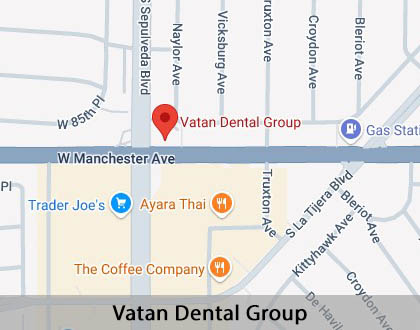

Scan here to visit Vatan Dental Group on mobile
Dental Terminology
- Cosmetic Dentistry
- Cosmetic dentistry is generally used to refer to any dental work that improves the appearance (though not necessarily the function) of a person's teeth, gums and/or bite.
- Decay
- Tooth decay is when the enamel of the tooth begins to decay and cause erosion from plaque and tartar on the teeth.
- Dental Caries
- Dental caries are also known as cavities and result from a lack of proper oral hygiene leaving plaque that forms tiny holes in the teeth.
- Dental Checkup
- A dental checkup is an appointment that involves cleaning the teeth, identifying any signs of infection and removing said signs of infection at least once every six months in the office.
- Dental Filling
- A dental filling involves restoring the structure of the tooth by using metal, alloy, porcelain or plastic to fill the tooth.
- Dental Prophylaxis
- A dental prophylaxis is a professional and detailed cleaning that involves the removal of plaque, calculus and stains from the teeth.
- Dental Sealants
- Dental sealants contain a resinous material that we apply to the chewing surfaces of the posterior teeth to prevent dental caries.
- Dentist
- A dentist, also known as a dental surgeon, is a doctor who specializes in the diagnosis, prevention, and treatment of diseases and conditions of the oral cavity.
- Gingivitis
- Gingivitis is the inflammation of gum tissue that results from plaque, other infections in the mouth and poor oral hygiene.
- Preventive Dentistry
- Preventive dentistry is the dentistry that focuses on maintaining oral health in order to prevent the spread of plaque, the formation of tartar and infections in the mouth.
- Tartar
- Tartar forms when plaque builds up on the surface of the teeth and calcifies into a hard surface that is much more difficult to remove and will require professional treatment.
- Tooth Enamel
- Tooth enamel is the protective visible outer surface of a tooth that contains the dentin and dental pulp.
Call Us Today
Following through with dental checkups is how patients can ensure that their smile stays healthy and free of decay or disease. Our dental team is here to help. To schedule a dental checkup or for help with your dental questions, please call our team at (310) 906-1300.
Request AppointmentHelpful Related Links
- American Dental Association (ADA). Glossary of Dental Clinical Terms. 2025
- American Academy of Cosmetic Dentistry (AACD). Home Page. 2025
- WebMD. WebMD's Oral Care Guide. 2025
About our business, license, and website security
- Vatan Dental Group was established in 2012.
- We accept the following payment methods: American Express, Cash, Check, Discover, MasterCard, and Visa
- We serve patients from the following counties: Los Angeles County
- We serve patients from the following cities: Los Angeles, Inglewood, Westchester, Marina del Rey, Playa del Rey, Playa Vista, Culver City, Fox Hills, Hawthorne, El Segundo and Santa Monica
- CA (License #49259). View License Information and Specifics
- National Provider Identifier Database (1740278662). View NPI Registry Information
- Norton Safe Web. View Details
- Trend Micro Site Safety Center. View Details

Scan here to open directions to Vatan Dental Group on mobile