

When To Go Straight to the ER
Per the American Dental Association, the number of dental-related ER visits nearly doubled, from 1.1 million to 2.1 million, between 2000 and 2010. Despite the increase in numbers, there are actually very few dental-related concerns for which patients should head immediately to their hospital's ER department.
When a Patient Experiences Trauma to the Face
If a blow to the face or accident results in chipped, cracked, or lost teeth, an emergency dentist should be equipped to handle the situation. However, when the accident or incident causes extensive facial trauma, such as broken bones, puncture wounds, lacerations, or damage to the soft tissues, it may be a good idea for the injured party to seek medical care before emergency dental care. Emergency dentists may have the capacity to restore oral health, but most cannot set broken bones, sew up lacerations, or perform other extensive medical procedures.
When an Emergency Dentist Is Unavailable
If someone experiences a dental emergency aside from those mentioned above, and if an emergency dentist is not immediately available to handle it, then the patient should head to the hospital. Though ER personnel may not be able to treat the underlying condition, they can help the patient manage the pain and other symptoms until an emergency dentist becomes available.
“There are actually very few dental-related concerns for which patients should head immediately to their hospital's ER department.”
When To Call a Local Emergency Dentist First
In the majority of oral health emergencies, patients should contact their emergency dentists before heading to the ER. In addition to helping patients manage symptoms, dental professionals can treat underlying conditions and ensure they do not grow worse. For individuals who are not sure what constitutes a "dental emergency" as opposed to a non-urgent yet uncomfortable situation, the ADA provides guidance. The most common situations that characterize a dental emergency are the following:
- Bleeding that will not stop
- Infection accompanied by swelling or pain
- Painful swelling around or in the mouth, with or without infection
- Chipped, broken, or dislocated teeth
- Abscess with localized pain and swelling and no signs of complications
- Loss of a permanent or temporary restoration
Other problems that may necessitate immediate but not emergency care include broken, irritating, or malfunctioning dentures; oral sutures; and bent or broken orthodontic appliances or wires.
“In addition to helping patients manage symptoms, dental professionals can treat underlying conditions and ensure they do not grow worse.”
What Emergency Dental Treatment Entails
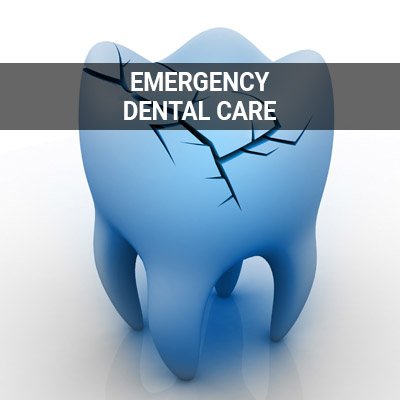
Emergency dental treatment looks different for everyone, as no two dental issues are exactly the same. However, some occurrences are more common than others, which means there are certain treatments emergency dentists perform more often than others. Examples of frequently performed emergency dental procedures include:
- Tooth extraction
- Tooth replacement (placing a knocked-out tooth back in the socket)
- Filling or crown replacement
- Tooth restoration
Regardless of what brings a patient to an emergency dentist's office, dental teams typically thoroughly clean the mouth and around the affected area, take X-rays of the mouth, and focus on pain and infection management.
“There are certain treatments emergency dentists perform more often than others.”
Questions Answered on This Page
Q. When should I go straight to the emergency room?
Q. When should I call an emergency dentist first?
Q. What does an emergency dental treatment entail?
People Also Ask
Q. Do I need a tooth extraction?
Q. What should I do if I chip a tooth?
Frequently Asked Questions
Q.What is a dental emergency?
A.Dental emergencies may involve severe pain, heavy oral bleeding, or tooth damage. Sometimes, patients find it hard to determine whether they are experiencing an emergency. When in doubt, reach out to an emergency dentist or doctor for guidance. Always seek care for sudden or worsening tooth pain.
Q.What should I do if I need emergency dental care?
A.If you experience a dental emergency, call your dentist. The office team can determine whether you need to visit the ER. If the dentist can handle the problem in-office, the team can arrange a same-day appointment.
Q.What should I do if I cannot reach my dentist during a dental emergency?
A.If an emergency happens during evenings, weekends, or holidays, go straight to the ER. Do not wait until your dental office reopens. Delaying emergency dental care may result in life-threatening health complications or permanent tooth damage.
Q.What dental emergencies always require an ER visit?
A.Dental emergencies may occur after a head injury. If you suffer a blow to the head, visit the ER for a full exam. Head injuries may seem minor at first, but they can trigger internal bleeding or brain inflammation. See a doctor for a complete screening. Then contact your emergency dentist after you leave the hospital.
Q.What should I do if I have injured my gums, cheeks, or tongue?
A.First, stop the bleeding immediately. You may do so by applying light pressure to the injury site with a cold compress. Then, contact us right away.
Quality Dental Services Can Transform Your Smile
By visiting us as soon as possible, our team can help get you the professional treatment you need. Instead of waiting around and allowing the symptoms to get worse, we can provide you with treatment options.
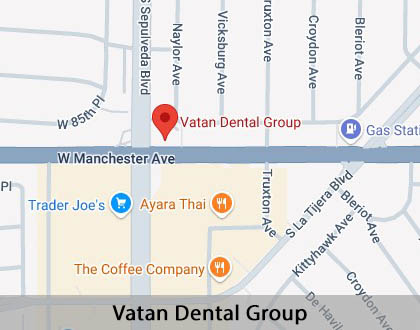

Scan here to visit Vatan Dental Group on mobile

Dental Emergency Terminology
- Abscess
- A dental abscess is a pocket of pus the forms in the tooth root from a bacterial infection.
- Dentist
- A dentist, also known as a dental surgeon, is a doctor who specializes in the diagnosis, prevention, and treatment of diseases and conditions of the oral cavity.
- Facial Cellulitis
- Facial cellulitis is a condition in which an infection from an abscess or plaque in the teeth causes pain and spreads throughout the face.
- Facial Trauma
- Facial trauma can occur when someone is hit in the face by a ball or accidental elbow, along with smashing the face into objects such as a wall or steering wheel.
- Impacted Wisdom Tooth
- An impacted wisdom tooth is a tooth that does not erupt from the gums properly that can cause pain and become infected without professional extraction.
- Irreversible Pulpitis
- Irreversible pulpitis is when the pain in the tooth occurs spontaneously or continues to hurt after the patient removes the hot/cold substance that was causing pain. Normal pulpitis will cease hurting directly after removing what is causing the pain.
- Lateral Luxation
- Lateral luxation is the displacement of a tooth that moves it in the wrong direction while it is still attached to the gums.
- Pericoronitis
- Pericoronitis is the inflammation of soft tissues surrounding a tooth that does not fully erupt from the gums and causes pain.
- Tooth Avulsion
- Tooth avulsion is when the tooth completely displaces from the socket due to an accident or other health issues. We can replant the tooth if the patient seeks immediate care.
- Tooth Fracture
- A tooth fracture can result from multiple sources including an accidental elbow to the face during a sports game, biting on something really hard, falling face first and more.
Call Vatan Dental Group in the Event of an Emergency
Dental emergencies can happen at any time. Know you can rely on our team when they do. Call (310) 906-1300 for the immediate care you need when one does.
Request AppointmentHelpful Related Links
- American Dental Association (ADA). Glossary of Dental Clinical Terms. 2025
- American Academy of Cosmetic Dentistry (AACD). Home Page. 2025
- WebMD. WebMD's Oral Care Guide. 2025
About our business, license, and website security
- Vatan Dental Group was established in 2012.
- We accept the following payment methods: American Express, Cash, Check, Discover, MasterCard, and Visa
- We serve patients from the following counties: Los Angeles County
- We serve patients from the following cities: Los Angeles, Inglewood, Westchester, Marina del Rey, Playa del Rey, Playa Vista, Culver City, Fox Hills, Hawthorne, El Segundo and Santa Monica
- CA (License #49259). View License Information and Specifics
- National Provider Identifier Database (1740278662). View NPI Registry Information
- Norton Safe Web. View Details
- Trend Micro Site Safety Center. View Details

Scan here to open directions to Vatan Dental Group on mobile